
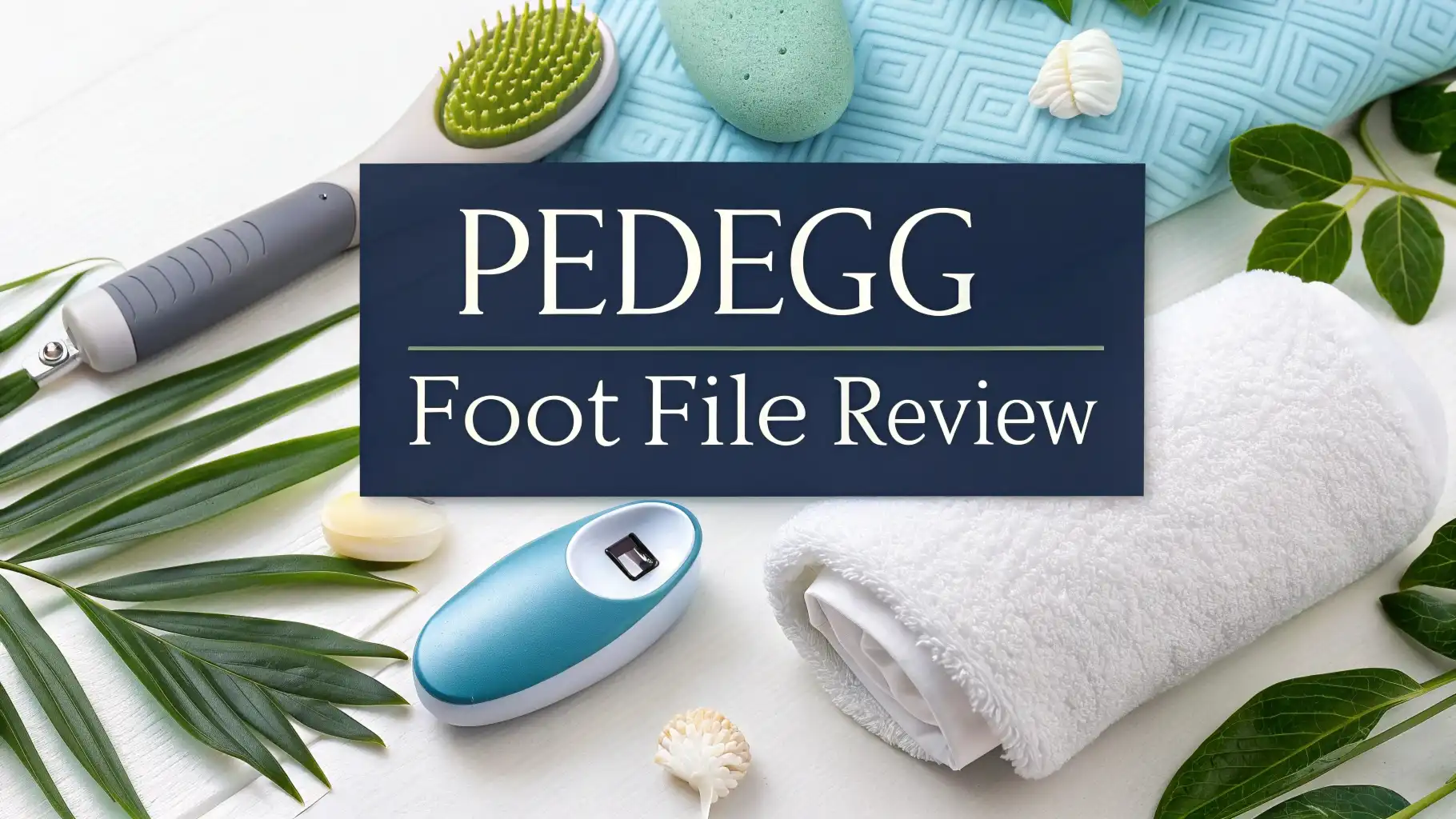
Your heels crack. Your socks snag. You have tried creams, stones, and salon visits, yet the rough skin returns in weeks. The PedEgg foot file promises a simple fix at a low price, and millions of buyers have already tested that promise. This review explains what the PedEgg actually does, how it feels on your skin, and where it falls short.
You will also see three strong alternatives that cost about the same. By the end, you will know whether this egg shaped tool deserves a spot in your bathroom cabinet in 2026.
In a Nutshell
- The PedEgg is a manual callus remover with over 135 precision microfiles on a curved metal surface. It shaves dry skin when you rub it across your heels.
- The classic model costs about $9.19 on Amazon and holds a 4.6 star rating across roughly 9,600 reviews, so most buyers report good results.
- It traps shavings inside the egg shell. That design keeps your floor clean, which is the main reason people choose it over a plain rasp.
- It works best on dry feet. Soaking your feet first softens the skin and reduces how much dead skin the file can lift.
- It suits light to medium callus buildup. Thick, painful, or cracked heels need a podiatrist or a stronger electric device.
- The main downsides are durability and pressure control. Some users press too hard, and some units lose their edge after a few months of steady use.
What the PedEgg Foot File Is
The PedEgg is a handheld foot file shaped like an egg. A stainless steel grating surface covers one side. A plastic shell covers the other side and collects the shavings as you work. The brand sells several models, yet the classic version remains the best known. BulbHead describes it as the top selling PedEgg Classic, with painless exfoliation, an ergonomic shape, and a mess free body. The tool targets dead skin on your heels, the balls of your feet, and the sides of your toes. It does not cut living skin when you use light pressure. You hold the egg in one hand and glide it across the dry area for a few minutes. Then you open the shell, dump the shavings, and rinse the file. The whole routine takes about five minutes. That short routine makes the PedEgg a practical choice for people who want smooth feet without booking an appointment.

- At-Home Foot Exfoliator: going to the salon to remove dead skin from your feet is costly. PedEgg Classic is...
- Gentle and Painless: foot files can be scary. Not PedEgg Classic though. Our foot exfoliator is gentle, safe...
Last update on 2026-10-19 / Affiliate links / Images from Amazon Product Advertising API
How the PedEgg Removes Dead Skin
The PedEgg removes dead skin through abrasion, not through chemicals. Each microfile acts like a tiny plane. When you drag the surface over a callus, the blades lift thin layers of hardened skin. The shell catches the pieces so they do not fall on your floor or your clothes. According to the product listing, the surface uses gentle exfoliating agents for dead skin and hard scabs, and it works on both wet and dry feet. The curve of the egg matches the shape of your heel, so the file reaches the rounded edges that flat rasps miss. The process stays painless when the skin is thick and dry. It can sting when you press on thin or freshly soaked skin. The NHS advises that a foot file should glide across the skin and should not feel like scraping, so keep your strokes light and short. One short session per week usually keeps calluses under control.
PedEgg Classic Features and Build
The PedEgg Classic uses a white pearlized shell with a metal grating plate on top. The package includes two emery finishing pads, which smooth the skin after filing. The egg measures about four inches long, so it fits in a travel bag or a drawer. The shell opens with a small tab, and the shaving compartment holds enough debris for one full session on both feet. The brand states that the Classic carries over 135 precision microfiles, which is more than the earlier 100 file version. The plastic body feels light and slightly hollow. That lightness helps control, yet it also explains why heavy pressure shortens the life of the blades. The finishing pad wears out faster than the metal plate. Replacement pads cost little, and most users replace them every few months. Cleaning takes seconds because the shell opens wide and the metal plate rinses under a tap.
- At-Home Foot Exfoliator: going to the salon to remove dead skin from your feet is costly. PedEgg Classic is...
- Gentle and Painless: foot files can be scary. Not PedEgg Classic though. Our foot exfoliator is gentle, safe...
Last update on 2026-10-19 / Affiliate links / Images from Amazon Product Advertising API
Top 3 Alternative for PedEgg Foot File
1. Amopé Pedi Perfect Electric Callus Remover. This cordless device spins a roller head covered in diamond crystals. It removes hard skin without manual effort, and it runs on batteries. The listing shows a 4.4 star rating from about 26,000 buyers at roughly $22.99. Choose this option when your calluses feel thick and your hands tire from manual filing.

- The Amopé Pedi Perfect Electronic Foot File gently & effectively buffs away your thick, hard skin to reveal...
- Includes Extra Coarse roller head with diamond crystals to effortlessly & effectively remove very hard skin...
Last update on 2026-10-19 / Affiliate links / Images from Amazon Product Advertising API
2. Colossal Foot File Scraper by Microplane. This stainless steel rasp carries a 4.8 star rating from about 16,100 reviews at about $11.99. The wide blade covers more skin in one pass. It has no catch tray, so you file over a towel. Many salon workers rely on this style of rasp for heavy heels.

- SHOWER FOOT SCRUBBER OR DRY FOOT SCRAPER: The original stainless-steel Colossal Microplane foot file, proudly...
- PROFESSIONAL FOOT CALLUS REMOVER: With its extra-large filing surface, 5.25” x 2.25, the over 400 tiny...
Last update on 2026-10-19 / Affiliate links / Images from Amazon Product Advertising API
3. Nano Glass Foot File. This glass tool uses etched crystal instead of metal blades. It holds a 4.6 star rating from about 20,300 reviews at about $8.47, and it ranks as a best seller in its category. The surface never rusts, and it rinses clean in seconds. It suits people who want a gentle file for weekly upkeep.

- Glass foot file callus remover exfoliates and smooths hard, rough and callused skin with little effort
- Safe, gentle, and effective callus shaver for feet, ideal among other pedicure tools for feet

Last update on 2026-10-19 / Affiliate links / Images from Amazon Product Advertising API
PedEgg Classic Pros and Cons
Pros
- Low price. The classic model costs less than a single salon pedicure.
- No batteries or cords. You use it anywhere, including on a trip.
- Clean operation. The shell traps shavings and keeps floors tidy.
- Simple routine. Five minutes once a week controls mild calluses.
- Wet and dry use. The listing allows both, so you can file after a shower.
- Replaceable pads. You refresh the finishing surface without buying a new tool.
Cons
- Small file surface. Thick heels take many passes and steady patience.
- Pressure sensitive. Pressing hard can scrape skin and cause soreness.
- Plastic build. The shell feels light, and the tab can loosen over time.
- Blade wear. The microfiles dull after months of regular use.
- No vacuum. Unlike electric models, you still open the shell and dump the debris.
- Not for medical conditions. Cracked or painful heels need clinical care, not a file.
PedEgg Power and Electric Models
The brand also sells the PedEgg Power, a cordless electric callus remover. It uses a motorized spinning roller instead of a manual grating plate. Menards describes the device as blade free, which means it buffs the skin rather than shaving it . The motor spins fast, so you move the roller slowly across your heel in short passes. One reviewer found the motor loud and compared the sound to a drill, and the same writer reported uneven results on thick skin. Electric versions cost more than the manual Classic. They help people with limited hand strength or large callus patches. They also need batteries or charging, and the roller heads wear down. For light upkeep, the manual egg remains the better value. For heavy buildup, an electric device saves time and effort.
PedEgg Jumbo and Dual Pumice Options
The brand offers a few shapes beyond the original egg. The Jumbo version gives you a wider filing surface for faster work on large heels. The Dual Pumice model pairs a coarse side with a finer side, so you can rough file and then polish in one session. These versions keep the same catch tray design that made the classic popular. A dual surface helps because coarse filing leaves a slightly rough texture. You then switch to the finer side or the emery pad to smooth the surface. Target lists Classic, Jumbo, and Power models in its PedEgg range, which shows the brand now covers most foot care needs. Choose the Jumbo when your heels are broad and hard. Choose the Dual Pumice when you want one tool for both stages of filing. Choose the Classic when you want the lowest price and the smallest size for travel.
How to Use the PedEgg Step by Step
Step one. Wash your feet and dry them fully. Dry skin files away faster and with less pulling.
Step two. Hold the egg so the grating surface rests flat on your heel. Grip the shell with your fingers and thumb.
Step three. Glide the file across the callus in short strokes. Use light pressure and let the blades do the work.
Step four. Check the skin every ten strokes. Stop when the area feels smooth instead of rough.
Step five. Swap to the emery pad and buff the filed area for thirty seconds.
Step six. Open the shell and tap the shavings into a bin. Rinse the plate and let it dry.
Step seven. Apply a rich moisturizer or an urea based cream. Moisture keeps new skin soft for longer.
Repeat this routine once a week. Do not file the same spot every day, because the skin needs time to recover. If your heel stings, stop and wait a few days.
PedEgg Results: What Real Users Report
Most buyers report smooth heels after two or three sessions. On SheSpeaks, the PedEgg holds a 4.2 out of 5 score, and 84 percent of reviewers recommend it. One reviewer wrote that the tool removed dead skin from the bottom of the feet and from hard to reach areas, and that the skin felt smooth and hydrated after use. The Amazon listing shows a 4.6 star rating across roughly 9,600 reviews, which points to steady satisfaction over many years. Results depend on your skin type and your method. Dry, cracked heels respond well after a few weekly sessions. Very thick calluses need many weeks of filing plus daily moisturizer. Some users on Reddit report that manual filing made their calluses feel worse, which usually means the pressure was too heavy and the skin was too dry. A gentler touch and a weekly schedule solve that problem for most people.
PedEgg Safety Rules and Common Mistakes
Mistake one. Filing wet, soaked feet. Soft skin folds under the blade and the file removes less dead tissue.
Mistake two. Pressing hard to finish faster. Heavy pressure scrapes living skin and causes soreness.
Mistake three. Filing daily. The skin thickens again as a defense response, so the callus returns.
Mistake four. Skipping moisturizer. Filing alone leaves dry skin that hardens within days.
Mistake five. Using the tool on cracked or bleeding skin. An open crack can become infected.
Stop using any foot file when you feel sharp pain or see blood. People with diabetes, poor circulation, or nerve damage in the feet should ask a doctor before filing at home. The same rule applies to anyone with a current foot infection or a wound. Sanitize the metal plate with rubbing alcohol after each session, especially if you share the tool. Replace the emery pads when they look smooth. A clean, sharp tool gives better results and lower risk.
Wet Feet or Dry Feet: The Better Choice
The PedEgg listing permits both wet and dry use, yet the results differ. Dry skin offers more resistance, so the blades catch the callus and shave it cleanly. Wet skin feels soft and slippery, and the file glides without removing much dead tissue. Many users soak first because it feels gentler, then wonder why their heels stay rough. A better method is to file dry, then soak and moisturize afterward. This order lets the file work at full strength and lets the moisturizer sink into the freshly smoothed skin. If you prefer wet filing, dry your feet with a towel first and wait ten minutes. Then file with light strokes. Some electric models allow wet use in the shower, yet manual files perform best on dry skin. Test both ways on one heel and compare the texture after a week. Most people notice a clear difference.
Cleaning and Storing Your PedEgg
Cleaning takes less than a minute, and it protects both your skin and the tool. Open the shell by pressing the tab. Tap the shavings into a bin, then rinse the plastic parts with warm water. Wipe the metal plate with a cloth. Do not put the egg in a dishwasher, because heat can warp the plastic. Dry every part with a towel before you close the shell. Trapped moisture encourages bacteria and can dull the blades over time. Store the egg in a drawer or a small pouch, away from damp surfaces. Keep the emery pads in a dry spot so the grit stays intact. Replace the pads when the surface looks shiny, since worn pads polish very little. A replacement pack costs a few dollars. A clean tool with sharp blades gives better results in fewer strokes, which also means less pressure on your skin. That habit keeps your feet smooth and your tool ready.
PedEgg vs Electric Foot Files
Manual and electric files serve different needs. The PedEgg gives you full control because your hand sets the speed and the pressure. It costs less, needs no power, and makes no noise. It suits light to medium calluses and weekly upkeep. Electric files spin a roller at high speed and remove thick skin in fewer passes. They help people with limited grip strength or limited patience. They cost more and need batteries or charging. Some models run loud, and the roller heads need replacement. Electric files also allow too much removal if you hold them in one spot. Think about your callus thickness before you choose. Light buildup points to a manual PedEgg or a glass file. Thick, pale, rock hard heels point to an electric device or a professional rasp such as the Colossal scraper. Many households own both, using the manual tool for upkeep and the electric model for occasional deep work.
Who Should Buy the PedEgg
The PedEgg suits several groups of people. It fits anyone with mild calluses who wants a cheap, quiet, and portable tool. It fits travelers who cannot carry a powered device. It fits people who dislike the mess of a plain rasp, because the shell catches the shavings. It fits anyone who wants to start a weekly foot routine without a large investment. It does not suit everyone. People with thick, painful heel fissures need clinical treatment. People with diabetes or nerve damage in the feet should not file at home without medical advice. People who demand fast results on very hard skin will feel frustrated by the small file surface. Think about your goal before you buy. Weekly maintenance is a clear yes. One time removal of a heavy callus is a weak case for this tool. Match the tool to the job and you will enjoy the result.
PedEgg Price and Value in 2026
The PedEgg Classic sells for about $9.19 on Amazon and carries the Amazon’s Choice badge. That price sits far below the cost of one salon pedicure, which often runs between $35 and $70 in most cities. The tool includes the egg itself plus emery finishing pads. Replaceable pads cost a few dollars and last several months. Add a moisturizer and your yearly cost stays low. That math makes the PedEgg a strong value for basic upkeep. The value drops for heavy callus work, because one cheap tool may not finish the job. In that case you either add an electric remover or a stainless rasp. Both options cost between $8 and $25, so a full home kit still costs less than two salon visits. Judge the price against your skin condition, not against the sticker alone.
PedEgg Customer Reviews Summary
Feedback across retailers tells a steady story. Amazon shows 4.6 stars from about 9,600 ratings, and SheSpeaks shows 4.2 out of 5 with 84 percent of users recommending the tool. Target shoppers describe the file as easy to use and easy to clean, and several mention soft feet after the first session. Positive reviews focus on three points, which are the low price, the clean catch tray, and the quick routine. Negative reviews focus on three other points, which are blade wear, light plastic, and weak results on very hard skin. The complaints rarely mention injury. When discomfort appears, the writer usually admits to heavy pressure or wet skin. That pattern shows the main risk sits with technique, not with the design. Read the middle reviews, not just the five star posts, and you will get a fair picture before you buy.
Final Verdict
The PedEgg foot file earns its long run in the market. It costs about $9.19, holds a 4.6 star rating from roughly 9,600 Amazon buyers, and cleans up in under a minute. It traps shavings, needs no power, and fits in a small bag. Those traits make it a smart pick for weekly heel care on mild to medium calluses. It does have limits. The file surface is small, the plastic body feels light, and heavy pressure causes soreness. Very hard calluses need an electric remover or a stainless rasp. If your goal is steady upkeep at a low price, buy the Classic. If your heels are thick and painful, start with the Amopé Pedi Perfect or the Colossal scraper, then keep the PedEgg for maintenance. Either way, add a moisturizer to your routine. Smooth feet come from weekly filing plus daily moisture, not from one long session.
FAQs
Does the PedEgg really work on hard calluses?
It works well on mild and medium calluses. Very thick or painful calluses need professional care or a stronger electric tool.
How often should I use the PedEgg?
Once a week suits most people. Daily filing makes the skin thicken again as a defense response.
Is the PedEgg painful to use?
It feels painless when you use light strokes on dry skin. Sharp pain means too much pressure or skin that is too thin.
Can I use the PedEgg in the shower?
You can use it on wet feet, yet results are weaker. Dry filing removes more dead skin in fewer passes.
How do I clean the PedEgg?
Open the shell, tap out the shavings, rinse the plastic, and wipe the metal plate. Let every part dry before you close it.
How long does a PedEgg last?
The shell lasts for years. The microfiles dull after months of regular use, and the emery pads wear out sooner.
Is the PedEgg safe for people with diabetes?
Ask your doctor first. Diabetes can reduce foot sensation and slow healing, so home filing carries more risk.
What is the best PedEgg model?
The Classic suits weekly upkeep at the lowest price. The Jumbo covers more skin, and the Power electric model helps with thicker calluses.
